

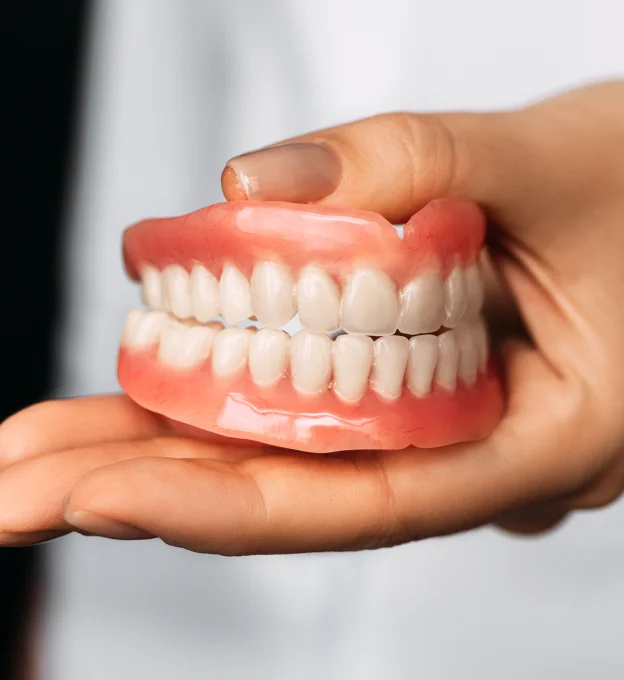
How Dentures Can Restore Daily Function
Replacing missing teeth with dentures can help restore both everyday function and the appearance of your smile. Depending on the type of denture and number of teeth being replaced, dentures can replace several missing teeth or an entire arch while supporting chewing and clearer speech.
They also provide a removable tooth-replacement option when appropriate and can help fill visible gaps caused by tooth loss. By restoring a more complete appearance, dentures can support greater comfort and confidence during everyday activities, including eating, speaking, and smiling.
Choosing the Right Denture Option
The appropriate denture depends on how many teeth are missing, the condition of the remaining teeth and gums, and the overall restorative plan. Common denture options include:
- Complete or Full Dentures: Complete dentures replace all teeth in the upper arch, lower arch, or both. They are designed for patients who have lost all or nearly all teeth in an arch and need comprehensive tooth replacement.
- Partial Dentures: Partial dentures replace multiple missing teeth while some natural teeth remain. They fill gaps in the smile and can help restore function while fitting around the existing teeth.
- Immediate Dentures: Immediate dentures are designed for placement around the time teeth are removed, when appropriate. They can provide a temporary tooth-replacement solution while the mouth heals and may require later adjustments for fit.
- Implant-Supported Dentures: Implant-supported dentures use dental implants for additional support instead of relying only on the gums. They may be considered for patients who need greater stability and are appropriate candidates for implant treatment.
- Flexible Dentures: Flexible dentures use a bendable material and may be considered in selected cases. Suitability depends on the number and location of missing teeth, oral health, comfort preferences, and the overall restorative plan.
From Denture Planning to a Comfortable Fit
Denture treatment begins with an evaluation of your oral health and tooth-loss concerns. The exact sequence depends on the type of denture being considered, the condition of the mouth, and whether any teeth need treatment before the restoration is made.
Evaluate Your Smile
The team reviews the number and location of missing teeth, remaining teeth, gums, bite, and overall oral health.
Discuss Denture Options
The recommended denture type is discussed based on your oral condition, functional needs, appearance goals, and the teeth available for support.
Create the Denture
Measurements and impressions are used as needed to develop a denture designed to fit the mouth and complement the natural appearance of the smile.
Check Fit and Function
The denture is evaluated for fit, comfort, appearance, and function, with adjustments made when needed to improve the way it feels and works.
Review Daily Care
The team explains cleaning, storage, handling, and routine dental care so you can maintain the denture and support the health of your mouth.
How to Care for Your Dentures
Proper denture care can help keep your dentures clean, comfortable, and in good condition over time. Remove and rinse your dentures after meals to clear away food particles, then gently brush them with a soft-bristled brush and a denture cleanser to help prevent buildup without damaging the material. When not in use, keep your dentures moist by storing them in water or a recommended denture-soaking solution, particularly overnight.
Avoid using hot water, which may affect their shape or fit. Maintaining good oral hygiene is also important, so clean your gums, tongue, and any remaining natural teeth regularly. Routine dental visits allow our team to evaluate your dentures, check their fit, and make adjustments when needed as your mouth naturally changes.
We’re Here to Help You Smile With Confidence
Terrell Family Dentistree in Terrell, TX, is committed to helping patients find a comfortable, natural-looking denture solution suited to their needs. Whether you are exploring dentures for the first time or looking to replace an existing set, our friendly team is ready to guide you through every step. Call us at (972) 210-7254 to schedule your consultation.
Schedule Your Denture ConsultationFrequently Asked Questions About Dentures
Most patients need a few weeks to adjust to speaking and eating comfortably with new dentures. Minor soreness during this adjustment period is common and generally improves over time.
Dentures typically need replacement or relining every five to ten years, as the shape of the jaw and gums gradually changes with age and use.
Removing dentures at night is generally recommended to give gum tissue a chance to rest and to reduce the risk of irritation or bacterial buildup.
Yes, partial dentures fill the gaps left by missing teeth, which helps keep the remaining natural teeth from gradually drifting out of position over time.
Some patients notice minor changes in speech initially, but most adjust within a few weeks as the tongue and mouth become accustomed to the new appliance.
Yes, most patients return to a fairly normal diet with practice, though it helps to start with softer foods and gradually reintroduce firmer foods as you adjust.
Implant-supported dentures anchor securely to dental implants, which helps reduce movement during eating and speaking while also supporting long-term jawbone health.
Dentures should be rinsed after meals, brushed daily with a soft brush and denture cleanser, and stored in water or a soaking solution overnight to maintain their shape.