

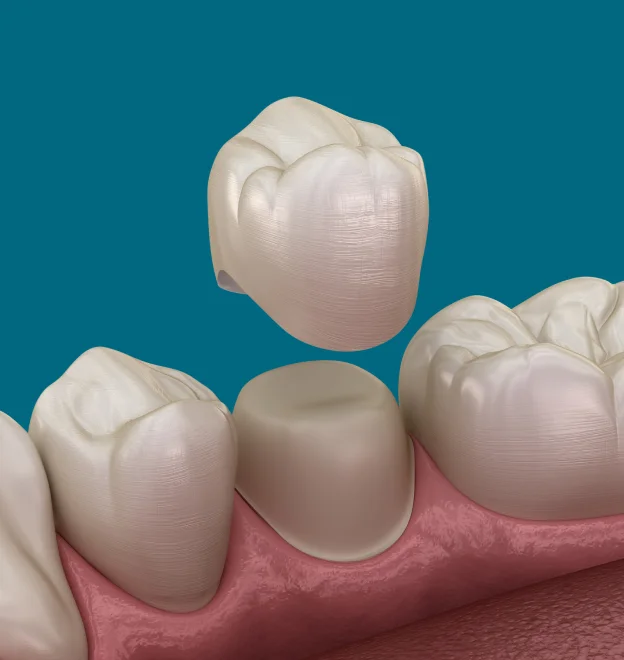
Why Dental Crowns Are a Reliable Solution
Dental crowns address structural problems that fillings and other minor repairs cannot fully resolve. Choosing a crown offers several practical advantages.
- Restores strength to teeth weakened by decay or fracture
- Protects teeth that have undergone root canal therapy
- Improves the appearance of misshapen or heavily discolored teeth
- Distributes biting force evenly to reduce strain on the tooth
- Provides a long-lasting solution built to withstand daily use
- Blends naturally with surrounding teeth for a seamless smile
When a Dental Crown May Be Recommended
Dental crowns are typically recommended for teeth with large cavities that cannot be adequately repaired with a filling, cracked or fractured teeth, and teeth that have recently undergone root canal treatment. Patients with severely worn or misshapen teeth, as well as those looking to anchor a dental bridge, may also be good candidates. A thorough exam, often supported by digital x-rays, helps determine whether a crown is the most appropriate way to protect and restore a particular tooth.
From Diagnosis to a Fully Restored Tooth
Placing a dental crown typically involves a structured process spread across two visits, ensuring an accurate fit and lasting results.
Initial Evaluation
The tooth is examined, often with x-rays, to confirm a crown is the right treatment and to check the health of the surrounding structure.
Tooth Preparation
The tooth is reshaped to make room for the crown, removing any decayed or damaged material in the process.
Impression or Digital Scan
A precise impression or scan of the prepared tooth is taken to guide the crown’s fabrication.
Temporary Crown Placement
A temporary crown is placed to protect the tooth while the permanent restoration is being made.
Permanent Crown Fitting
Once ready, the permanent crown is checked for fit and bite, then securely bonded into place.
Materials Used for Long-Lasting Crowns
Modern dental crowns are made from a range of durable materials, including porcelain, ceramic, and metal alloys, each offering a balance of strength and natural appearance. Porcelain and ceramic crowns are often favored for front teeth due to their ability to closely match natural tooth color, while metal or porcelain-fused-to-metal crowns may be recommended for back teeth that endure heavier chewing forces. The right material depends on the tooth’s location, function, and your specific aesthetic goals.
The dentist will also consider factors such as your bite, the condition of the tooth, and the amount of natural tooth structure remaining. Discussing these options during your consultation can help ensure the selected crown provides a comfortable fit, reliable function, and natural-looking result.
Protect a Damaged Tooth Before It Worsens
A damaged tooth can affect comfort, function, and confidence, but timely restorative care may help protect it from further problems. At Terrell Family Dentistree in Terrell, TX, our team is available to evaluate concerns, explain dental crown treatment, and help determine the most appropriate next step for restoring your oral health. Get in touch with our team today at (972) 210-7254 to book your consultation with us.
Request an AppointmentFrequently Asked Questions About Dental Crowns
With proper care, dental crowns generally last between ten and fifteen years, and some can last even longer depending on material choice and daily oral hygiene habits.
The tooth is typically numbed before preparation, so most patients feel little to no discomfort during the procedure. Mild sensitivity afterward is common and usually temporary.
The process usually spans two visits, with a temporary crown placed during the first appointment and the permanent crown fitted a few weeks later.
Yes, porcelain and ceramic crowns are often used on front teeth because they closely match natural tooth color and blend seamlessly with the surrounding smile.
A filling repairs a small portion of a tooth, while a crown covers the entire visible surface, making it a better option for extensively damaged or weakened teeth.
In many cases, yes. A crown protects a tooth that has undergone root canal therapy, since the tooth can become more brittle and prone to fracture afterward.
Crowned teeth should be brushed and flossed like natural teeth, with attention paid to the gumline where the crown meets the tooth to prevent decay underneath.
Contact our office as soon as possible if a crown feels loose or comes off, since prompt attention helps protect the underlying tooth from further damage.