


Types of Dental Bridges
The right bridge design depends on the number and location of missing teeth, the condition of surrounding structures, and the type of support available. During an evaluation, the dental team can explain which approach may best suit your needs.
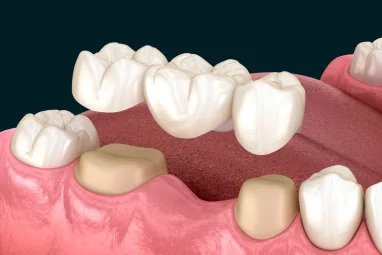
Traditional Dental Bridge
A traditional bridge uses crowns on supporting teeth to hold the replacement tooth or teeth in position and fill the space created by tooth loss.
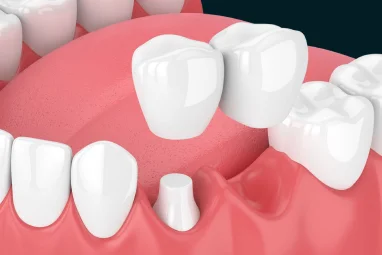
Cantilever Bridge
A cantilever bridge may be considered when support is available on only one side of the missing tooth area. Suitability depends on bite forces and the specific location.
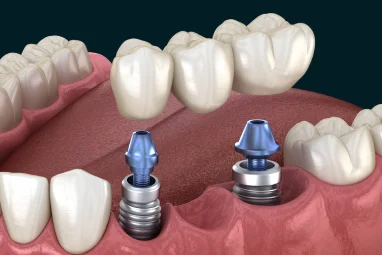
Implant-Supported Bridge
An implant-supported bridge uses dental implants for support rather than relying on neighboring natural teeth. This option may be considered when several adjacent teeth are missing and implant treatment is appropriate.
Why a Dental Bridge May Be the Right Solution
Replacing a missing tooth promptly helps prevent a range of complications that tend to worsen the longer a gap is left untreated.
- Restores the ability to bite and chew comfortably
- Prevents surrounding teeth from shifting into the empty space
- Helps maintain natural facial structure and bite alignment
- Improves speech that may be affected by a missing tooth
- Distributes bite force evenly across the dental arch
- Blends naturally with surrounding teeth for a complete smile
Getting Fitted for a Dental Bridge
Getting a dental bridge typically involves several carefully planned steps completed over a few visits. Each stage helps ensure the final restoration fits comfortably, functions properly, and blends naturally with your smile.
Initial Evaluation
We examine the missing tooth area, surrounding teeth, gums, and bite, using digital imaging or X-rays when needed to determine whether a bridge is appropriate.
Preparing the Abutment Teeth
The supporting teeth on either side of the gap are carefully reshaped to create enough space for the bridge and provide a stable foundation.
Impression or Digital Scan
We take precise impressions or digital scans of your teeth and bite, providing detailed information needed to create a customized bridge with an accurate fit.
Temporary Bridge Placement
A temporary bridge may be placed over the prepared teeth to protect them and maintain the appearance and function of your smile while the permanent restoration is created.
Permanent Bridge Fitting
Once your custom bridge is ready, we carefully check its fit, appearance, bite, and comfort before securely bonding the restoration into place.
Keeping a Dental Bridge Healthy
A dental bridge can provide long-term tooth replacement support when it is cared for consistently. Brush twice daily and clean around the bridge as recommended to help prevent plaque and food buildup around the restoration and supporting teeth. Using appropriate flossing or interdental cleaning methods can help reach areas beneath and around the bridge that may be difficult to access with regular brushing alone.
Routine dental examinations allow the dentist to monitor the condition of the bridge, supporting teeth, and surrounding gums. Avoid habits that could place unnecessary stress on the restoration, such as biting hard objects or using your teeth as tools. If your bridge feels loose, damaged, uncomfortable, or noticeably different from normal, contact the office for an evaluation.
Personalized Support for Tooth Replacement
If you are living with a missing tooth or have concerns about your bite, comfort, or smile, the team at Terrell Family Dentistree in Terrell, TX is here to help. We can evaluate your oral health, discuss your tooth replacement options, and help determine whether a dental bridge is right for your needs. Call us at (972) 210-7254 to schedule a consultation and take the next step toward a healthier, more complete smile.
Request an AppointmentFrequently Asked Questions About Dental Bridges
With proper care, dental bridges generally last between ten and fifteen years, and some can last even longer with consistent oral hygiene and regular dental visits.
The teeth supporting the bridge are numbed before preparation, so most patients experience little discomfort during the procedure. Mild sensitivity afterward is common and usually temporary.
In some cases, yes, though many patients need a healing period after extraction before a bridge can be properly fitted. Your specific timeline depends on individual healing.
A dental bridge can typically replace one to several consecutive missing teeth, depending on the strength of the supporting teeth or implants on either side.
Traditional bridges require healthy, strong teeth on either side of the gap for support. Implant-supported bridges offer an alternative when adjacent teeth are not suitable.
Bridges should be brushed twice daily and cleaned underneath using floss threaders or special flossers to remove plaque and food particles trapped beneath the restoration.
Yes, bridges can be replaced once they show significant wear or damage, and the surrounding teeth are typically reevaluated at that time to confirm they remain healthy.
Most patients adjust quickly to a new bridge, with eating and speaking feeling natural within a short period as they become accustomed to the restoration.