

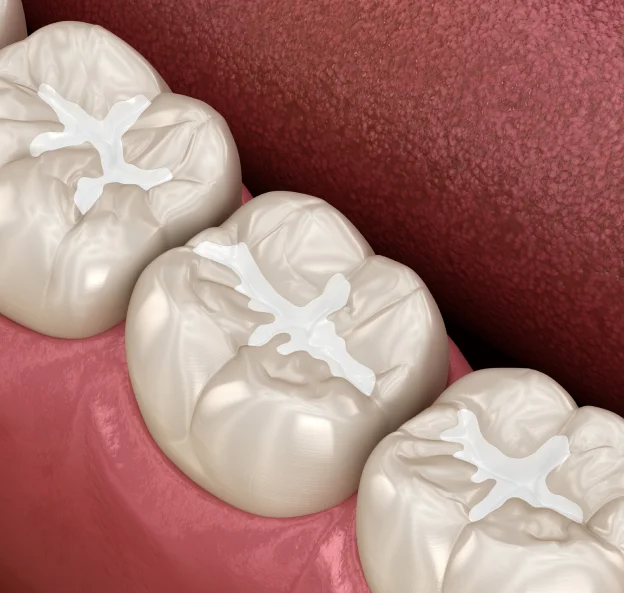
How Dental Sealants Help Prevent Cavities
Dental sealants act as a barrier over the pits and grooves of back teeth. Covering these areas can make it harder for food particles and cavity-causing bacteria to collect where a toothbrush may not reach easily. The CDC notes that sealants can protect against cavities for years and are especially useful on molars.
- Adds protection to the chewing surfaces of molars and other teeth with deep grooves
- Helps reduce places where food particles and plaque can collect
- Supports cavity prevention as part of a complete oral hygiene routine
- Can be especially useful when permanent molars have recently erupted
- Provides a quick, noninvasive preventive option during a dental visit
- Can complement regular cleanings, fluoride, brushing, flossing, and dental exams
Who Can Benefit from Dental Sealants
Dental sealants are especially valuable for children and teenagers as their permanent molars come in, since newly erupted teeth tend to have the deepest, most cavity-prone grooves. Adults with a history of frequent cavities, deep pits in their back teeth, or difficulty reaching certain areas while brushing can also benefit significantly. During a routine exam, our team checks the depth and shape of your tooth grooves to determine whether sealants would offer meaningful protection.
Our Dental Sealants Process
Applying dental sealants is one of the quickest, most straightforward procedures performed in a dental office, and most patients complete the process in a single visit. Here is how it typically works.
Cleaning and Drying the Tooth
Each tooth is thoroughly cleaned and dried to ensure the sealant bonds properly to the surface.
Preparing the Surface
A mild acidic solution is applied briefly to slightly roughen the tooth, helping the sealant adhere more securely.
Applying the Sealant
A liquid resin is painted directly into the grooves and pits of the tooth’s chewing surface.
Curing the Material
A special curing light is used to harden the sealant quickly, bonding it firmly to the tooth.
Final Check
The bite is checked to confirm comfort, and the tooth is examined to ensure full, even coverage.
How Long Dental Sealants Last
Dental sealants are durable but not permanent, typically holding up well for several years under normal chewing conditions. Regular dental visits allow our team to monitor sealants for signs of wear, chipping, or partial loss, and reapplication is quick and simple if needed. Maintaining consistent checkups ensures that this protective layer continues doing its job for as long as possible.
Added Protection for a Healthier Smile
Dental sealants can give cavity-prone chewing surfaces another layer of protection. At Terrell Family Dentistree in Terrell, TX, the team is available to evaluate your oral health, answer questions, and help determine whether sealants are a suitable part of your preventive care plan. Call us at (972) 210-7254 to learn whether dental sealants may be appropriate for you or your child.
Request an AppointmentFrequently Asked Questions About Dental Sealants
Dental sealants generally last several years with normal use, though their lifespan can vary based on chewing habits and oral hygiene. Regular checkups allow our team to monitor them and reapply if needed.
No, while sealants are especially common for children with newly erupted molars, adults with deep tooth grooves or a history of frequent cavities can also benefit from this protective treatment.
Applying dental sealants is completely painless. The process involves no drilling or anesthesia, and most patients feel little more than mild pressure during the short procedure.
Sealants can occasionally wear down or chip over time, particularly with heavy grinding or chewing. Routine dental visits help catch this early so the sealant can be reapplied as needed.
No, sealants are meant to complement, not replace, regular brushing and flossing. They add extra protection specifically to the hard-to-clean grooves of back teeth.
Children typically receive sealants soon after their first and second permanent molars erupt, usually around ages six and twelve, when these teeth are most vulnerable to decay.
Sealants are generally recommended for healthy teeth with deep grooves rather than teeth with existing decay. During an exam, our team can determine whether sealants or another treatment is more appropriate.
Many dental insurance plans cover sealants, particularly for children and patients identified as having a higher risk of cavities. Contact our office to verify your specific coverage details.