

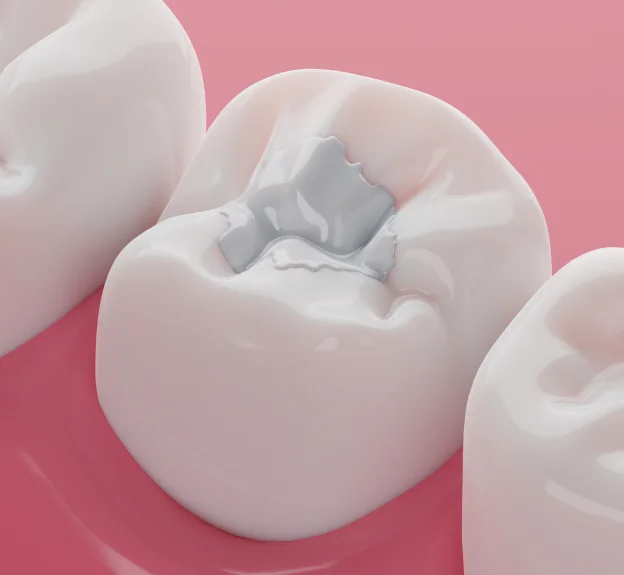
Why Composite Fillings Are a Practical Choice
Composite fillings offer a combination of function and appearance that makes them a widely used option for treating cavities.
- Blends naturally with the surrounding tooth for a discreet repair
- Bonds directly to tooth structure, requiring less removal of healthy tooth material
- Restores full chewing function to the treated tooth
- Can be shaped and polished to match the natural tooth contour
- Provides a durable solution for small to moderate cavities
- Completed in a single visit for most cases
Signs a Cavity May Need Attention
Tooth decay does not always cause noticeable symptoms in its early stages. Scheduling an evaluation is especially important when changes in a tooth suggest that decay or damage may be developing.
- Sensitivity to hot, cold, or sweet foods and drinks
- A visible dark spot or change in the tooth surface
- Food repeatedly getting trapped in one area
- A rough, chipped, or damaged area of a tooth
- Tooth pain or discomfort when biting
- A previous filling that feels damaged, loose, or worn
How a Composite Filling Is Placed
Placing a composite filling is a straightforward, carefully planned procedure that can typically be completed in a single office visit. Each step focuses on preserving healthy tooth structure, restoring function, and creating a natural-looking result.
Numbing the Area
A local anesthetic is used to numb the affected tooth and surrounding tissues, helping keep you comfortable while the dentist prepares and restores the tooth.
Removing Decay
The dentist carefully removes decayed or damaged portions of the tooth while preserving as much healthy structure as possible to support the restoration.
Preparing the Tooth
The remaining tooth surface is thoroughly cleaned and conditioned to create a suitable bonding surface, helping the composite resin adhere securely and provide lasting support.
Applying the Composite
Tooth-colored composite resin is placed in carefully selected layers. Each layer is shaped and hardened with a curing light before the next layer is applied.
Shaping and Polishing
Once the filling is built up, the dentist shapes it to follow the tooth’s natural contours. The restoration is then polished and checked for a comfortable, balanced bite.
What to Expect After Your Filling
Most patients can return to normal eating and speaking soon after a composite filling is placed, although it is best to wait until the numbness has completely worn off before chewing to avoid accidentally biting your cheek or tongue. Mild sensitivity to hot, cold, or pressure is common during the first few days and typically improves as the tooth adjusts. You may also notice a slight difference in how your bite feels immediately after treatment.
If sensitivity persists, worsens, or your bite feels uneven, contact the dentist for an evaluation. Maintaining good oral hygiene with regular brushing and flossing helps protect the filling and surrounding tooth structure. Routine dental visits also allow the dentist to monitor the filling and address any concerns early.
Treat Decay Before It Progresses Further
Cavities tend to grow more serious the longer they go untreated, often leading to more extensive and costly procedures. A composite filling offers an efficient, natural-looking way to treat decay while it remains manageable.
Schedule Your Filling ConsultationFrequently Asked Questions About Composite Fillings
Composite fillings generally last between five and ten years, depending on the size of the filling, its location, and how well the tooth is cared for.
The area is numbed with local anesthetic before treatment, so most patients feel little to no pain during the procedure. Mild sensitivity afterward is common and temporary.
Most composite fillings can be completed in a single visit, typically taking between thirty minutes to an hour depending on the size and location of the cavity.
Yes, composite fillings can be used on both front and back teeth, though the dentist will consider bite pressure and location when determining suitability.
Yes, composite resin is carefully shade-matched to your natural tooth color before application, allowing the filling to blend in discreetly with the surrounding tooth structure.
Contact our office as soon as possible if a filling becomes damaged or dislodged, since prompt attention helps protect the tooth from further decay or sensitivity.
Yes, composite resin can also be used to repair minor chips or cosmetic imperfections, offering a similar tooth-colored solution beyond treating cavities alone.
Most patients can eat once numbness wears off, typically within a couple of hours, though it is best to avoid very hard or sticky foods for the first day.